Build an AI Clawdbot: Automation, Pricing, Integrations, and SMB vs Enterprise Costs

Emma Ke
on January 26, 2026CMO
14 min read
AI Clawdbot Cost Breakdown: Short Answer
The cost to build an AI clawdbot depends on scope. An SMB version usually focuses on one or two channels, a few workflows, predictable chatbot pricing, and integrations such as email, CRM, calendar, or ecommerce order lookup. An enterprise version adds RBAC, audit trails, SSO, compliance review, custom integrations, environment controls, and deeper testing before launch.
The best way to control cost is to avoid treating every task as an autonomous agent problem. Use deterministic workflow nodes for routing, validation, API calls, and handoff; use AI only where language understanding or reasoning is needed. That keeps pricing predictable while still giving teams a production AI automation agent.
"How many AI agents work at your company? We now have over 30." This question appeared on a recent industry discussion, capturing a massive shift in how businesses approach automation. We're moving from basic chatbots that answer questions to "clawdbots" - AI automation agents that do the work.
What if your business had its own clawdbot working 24/7, handling customer support tickets, qualifying sales leads, processing returns, and resetting passwords - all without human intervention? According to Gartner, by the end of 2026, 40% of enterprise applications will integrate task-specific AI agents. Yet while 75% of small businesses are investing in AI, most struggle with cost and complexity barriers.
Chat Data bridges this gap: a production-ready platform that lets you build your own clawdbot in 4 weeks with workflow-based control, multi-model flexibility (GPT, Claude, Gemini), and enterprise-grade governance - at SMB pricing.
TL;DR
- "Clawdbot" = AI automation agent that autonomously handles customer support, sales, operations, and IT work. Not just conversation - workflows + integrations + decision-making. 40% of enterprise apps will have AI agents by end of 2026.
- The automation gap: 75% of SMBs investing in AI, but 82% of tiny businesses see it as "not relevant" due to cost barriers. Enterprises struggle with governance.
- Chat Data = "Clawdbot Builder": No-code workflow platform with multi-model flexibility (GPT, Claude, Gemini), enterprise governance, 4-week deployment vs. 6-12 months.
- Proven ROI: AI agents cost $0.25-$0.50/interaction vs. $3-$6 for humans (85-90% reduction). E-commerce example: $76K annual savings automating 500 daily tickets.
- Multi-channel deployment: Build once, deploy to WhatsApp, Slack, Discord, website, Messenger, Instagram. 2.75-3.5x lead capture improvement.
What is a "Clawdbot"? The AI Automation Agent Concept
A "clawdbot" is an AI automation agent that handles business work autonomously - not just answering questions, but executing tasks. Think of it as your digital employee that processes customer service requests, qualifies sales leads, books appointments, handles returns, and escalates complex issues to humans when needed.
Traditional chatbots are conversational tools. They answer "What are your hours?" or "Where's my order?" But a clawdbot goes further:
- Workflows: Multi-step business logic with conditional branching
- Integrations: Connects to your CRM, payment systems, inventory, helpdesk
- Decision-making: Routes requests based on complexity, updates databases, triggers actions
- Autonomous operation: Works 24/7 without human prompting
The market agrees. Gartner predicts that by 2026, 30% of enterprises will automate more than half of their network activities.
Use Cases for Your Clawdbot
Customer Support: Klarna's AI assistant handled 2.3 million conversations in its first month - two-thirds of all customer service chats, doing the work of 700 full-time agents. Response times dropped from 11 minutes to 2 minutes.
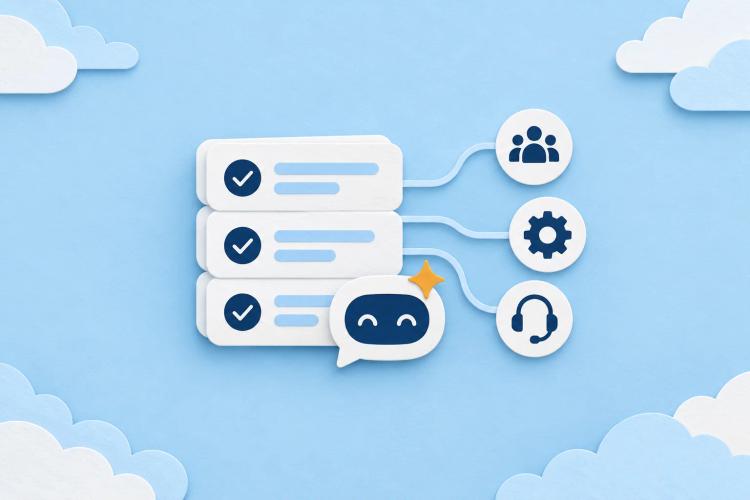
Sales Qualification: AI agents score leads, route high-value prospects to sales teams, book meetings, and update CRM records - all before a salesperson ever gets involved.
The question is no longer "Should we build a clawdbot?" but "How do we build one that's production-ready, governed, and actually works?"
The SMB & Enterprise Automation Gap
Despite the promise, businesses face real barriers. SMBs struggle with "Token Shock" - unpredictable usage-based pricing that makes forecasting impossible. They can't afford $50,000+ enterprise contracts or ML engineering teams.
Enterprises face different challenges: basic chatbots lack audit trails, compliance frameworks (PCI DSS, SOC 2, GDPR), and deterministic control. Conversational AI "guesses" responses, creating unpredictability that regulators won't accept.
Both need workflow-based control, enterprise governance, no-code accessibility, and multi-model flexibility - without 6-12 month implementations or vendor lock-in. This is where Chat Data enters the picture.
Chat Data - Your "Clawdbot Builder" Platform
Think of Chat Data as "Webflow for AI agents." Just as Webflow democratized web design by replacing custom code with visual builders, Chat Data democratizes AI automation by replacing months of ML engineering with drag-and-drop workflow design.
Core Differentiators
1. Workflow-Based Automation (Not Conversational Guessing)
Chat Data uses 20+ node types with deterministic control:
- Message & Interactive Nodes: Text, images, files, quick replies, dropdowns
- Function Nodes: API calls, database queries, webhook triggers
- AI Conversation Nodes: GPT, Claude, Gemini selectable per node
- Code & Validate Blocks: Custom JavaScript and conditional routing
Every workflow has dual-handle routing: success paths and error paths. If an API call fails, the workflow knows exactly what to do - retry, notify a human, or provide fallback options. Workflows guarantee predictable outcomes, not conversational guessing.
2. Multi-Model Flexibility (Best Model for Each Task)
Unlike platforms locked to a single AI model, Chat Data lets you choose GPT, Claude, or Gemini per workflow node:
- GPT-5.2: Speed-optimized for routine queries or complex reasoning
- Claude Opus 4.5: Long-form writing, nuanced responses
- Gemini 3 Pro: 1M context window for processing entire customer histories
Choose the best model for each task, optimize costs, and avoid vendor lock-in.
3. 4-Week Deployment (Not 6-12 Months)
Most SMBs go from signup to first production workflow in 4 weeks or less:
- Week 1-2: Design workflows, map use cases, set up integrations
- Week 3: Build and test with AI simulation
- Week 4: Deploy to production channels, monitor performance
Chat Data's no-code visual builder is accessible to non-technical teams - no engineering resources required.
4. Production-Ready Security and Governance
Enterprise features built-in: HMAC authentication, RBAC, execution history, PCI DSS alignment, multi-team deployment, and AI simulation testing. This addresses the #1 enterprise concern: governance frameworks to deploy AI agents at scale.
5. SMB Pricing with Enterprise Features
Chat Data starts at $99/month (example pricing) with enterprise governance built-in. Compare to Intercom/Drift ($74-$299/month, limited automation), Zendesk ($55-$115/agent/month, ticket-first), or enterprise platforms like Cognigy ($50,000+ annually, ML expertise required).
Real-World Automation Use Cases
Customer Support Automation: 80% Autonomous Resolution
Klarna's AI assistant handled 2.3 million conversations in its first month - two-thirds of all customer service chats, doing the work of 700 agents. Response times dropped from 11 minutes to 2 minutes.
The lesson? AI automation works brilliantly for routine inquiries, but complex issues still need humans. The winning approach is hybrid: AI for 80%, humans for 20%. Chat Data's workflow-based automation handles routine inquiries automatically and escalates complex issues to human agents via live chat integration.
Sales Qualification: Lead Scoring and Routing
A typical B2B sales workflow runs autonomously in Chat Data:
- Capture lead: Website form, chatbot conversation
- Qualify lead: Ask qualifying questions (budget, timeline, decision-maker)
- Score lead: Calculate fit score based on answers (0-100)
- Route lead: High-value (80+) → SDR, Medium (50-79) → Marketing nurture
- Update CRM: Salesforce, HubSpot, Pipedrive sync
- Book meeting: Calendar integration for high-value leads
No human involvement until the SDR gets a notification: "High-value lead qualified, meeting booked for Thursday 2pm."
Workflow-Based Control - Deterministic Automation
The fundamental difference between Chat Data and traditional chatbots is workflow-based control.
Traditional chatbots rely on conversational AI to "figure out" responses based on training data. This introduces unpredictability - different responses for the same scenario, occasional failures, inconsistent outcomes.
Chat Data's workflow approach uses deterministic nodes:
- API Call Node: Query order system → Success or Error handles
- Validate Block: Check return eligibility → Success or Fail handles
- Code Block: Generate RMA number, update database
- Function Node: Send return label via email API
- Message Node: Confirm completion
Every path is defined. Every error has a handler. Zero ambiguity. Chat Data includes AI-powered testing to simulate conversations across all workflow branches before go-live.
For enterprises requiring deterministic outcomes (financial services, healthcare, legal), workflow-based automation is non-negotiable.
Enterprise Governance & Compliance
Enterprise AI deployments require governance frameworks. Chat Data delivers:
Operational History for Workflow Review
With Store Conversations enabled, the chat logs retain the conversation transcript and normally include workflow path details such as:
- Timestamp: When did this workflow run?
- User: Who triggered it (visitor ID, session ID)?
- Nodes executed: Which workflow paths were taken?
- Variables: What data was processed?
- API calls: Which external systems were accessed?
- Outcomes: Success or error?
Switch Store Conversations off and the workflow still runs without the normal conversation record. One exception matters for live-chat deployments: if an operator assigns, snoozes, resolves, or takes over an active Redis-only session, Chat Data may materialize that session into the dashboard so the lifecycle state has a conversation record to update. Even with storage enabled, treat the path details as operational debugging history rather than guaranteed audit evidence: debug-storage failures can leave a retained conversation without its complete node history.
If your organization must reconstruct every automated decision, use its own durable audit system alongside these chat logs rather than treating the dashboard as the system of record.
HMAC Authentication and RBAC
HMAC (Hash-Based Message Authentication Code) secures webhook integrations - verifying that incoming requests are legitimate, not spoofed.
RBAC (Role-Based Access Control) ensures that:
- Admins: Full access to all workflows, settings, integrations
- Editors: Can design and test workflows, but not publish to production
- Viewers: Read-only access to analytics and chat logs
Multi-team deployments are isolated - Marketing can't see IT workflows, Sales can't modify Support workflows.
PCI DSS Alignment and Data Security
For businesses handling payment data, PCI DSS compliance is mandatory. Chat Data supports:
- Encrypted data transmission: TLS 1.3 for all API calls
- Secure variable storage: Sensitive data encrypted at rest
- Access controls: RBAC limits who can view/edit workflows
- Operational history: With Store Conversations enabled, chat logs retain transcripts and normally include workflow path details for debugging; they are not guaranteed audit evidence
This level of governance is standard in enterprise AI platforms costing $50,000+ annually. Chat Data delivers it at SMB pricing.
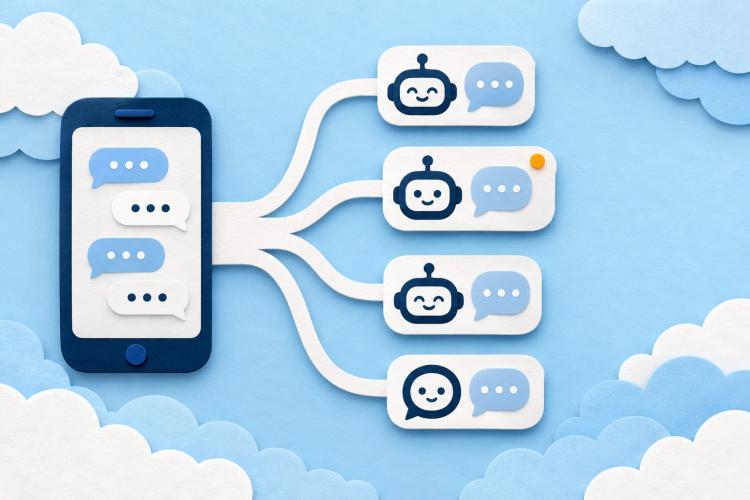
Multi-Channel Deployment - Build Once, Deploy Everywhere
A clawdbot is only valuable if your customers can access it where they already are. Chat Data supports:
Channels Supported
- Website Widget: Embed chatbot on your site
- WhatsApp Business API: Two billion users worldwide
- Slack: Internal employee support
- Discord: Community engagement
- Messenger: Facebook ecosystem
- Instagram: Direct messages
- Telegram: International markets
Build Once, Deploy Everywhere
Design a single workflow. Deploy it to all channels simultaneously. Chat Data handles platform-specific adaptations:
- Markdown translation: Facebook Messenger doesn't support markdown, Chat Data converts formatting
- URL signing: Discord and Slack require signed URLs for file attachments
- Audio responses: Some platforms support audio messages, others don't
- Interactive elements: Quick replies, buttons, dropdowns vary by platform
This is transformative. Without Chat Data, you'd need to:
- Build a website chatbot (3-4 weeks)
- Build a WhatsApp bot (2-3 weeks)
- Build a Slack bot (1-2 weeks)
- Build a Discord bot (1-2 weeks)
- Total: 7-11 weeks, separate codebases, different APIs
With Chat Data: 1 workflow, 1 week deployment to all channels.
Lead Capture Improvement
Multi-channel AI engagement increases lead capture by 2.75-3.5x compared to website-only deployment. Customers prefer messaging apps - meeting them where they are drives higher engagement.
ROI Case Study - E-Commerce Support Automation
Let's quantify the ROI with a realistic e-commerce scenario.
Scenario: Mid-Sized E-Commerce Company
- Daily support tickets: 500 (order status, returns, product questions)
- Current cost: 20 human agents @ $40,000/year each = $800,000 annually
- Average ticket handling time: 8 minutes
- Customer satisfaction (CSAT): 78%
After Chat Data Deployment (4 weeks)
Automation Rate: 80% of tickets handled by clawdbot (400/day)
- Routine inquiries: Order status, tracking, FAQs, product info
- Complex issues: Escalated to human agents (100/day = 20%)
Cost Breakdown:
- AI costs: 400 tickets/day × 365 days = 146,000 interactions/year @ $0.01/interaction = $1,460/year
- Human agents reduced: 16 agents no longer needed (80% automation) = $640,000 savings
- Remaining human agents: 4 agents for complex/escalated issues = $160,000
- Chat Data subscription: $99/month × 12 = $1,188/year (example pricing)
Total Annual Cost: $1,460 (AI) + $160,000 (agents) + $1,188 (subscription) = $162,648 Annual Savings: $800,000 - $162,648 = $637,352
But wait - we need to account for implementation:
- Implementation cost: 4 weeks × $5,000/week = $20,000 (internal labor + consulting)
- First-year savings: $637,352 - $20,000 = $617,352
Payback period: Less than 2 weeks.
Additional Benefits
- Response time: 2 minutes (vs. 15 minutes human average)
- Availability: 24/7/365 (vs. business hours)
- CSAT improvement: 82% (customers prefer instant responses for routine queries)
- Agent satisfaction: Remaining agents handle only complex, interesting work (not repetitive FAQs)
Forrester research confirms these results: AI customer service automation delivers 210% ROI over three years, with payback period less than 6 months, and $2.1 million in cost savings through automation and reduced agent interactions.
Another study found 315% ROI with payback period less than 6 months - $14.70 million in benefits over three years for a composite organization.
AI agents cost $0.25-$0.50 per interaction compared to $3.00-$6.00 for human agents - representing an 85-90% cost reduction. Average returns are $3.50 per dollar invested.
Competitive Comparison
Unlike Intercom/Drift (conversation-first, limited workflow capabilities), Zendesk (ticket-first with AI as add-on), or enterprise platforms like Cognigy ($50,000+, ML expertise required), Chat Data delivers workflow-based automation at SMB pricing with multi-model flexibility, 4-week deployment, and no-code accessibility.
FAQ - Building Your Own Clawdbot
What is a "clawdbot" and why do I need one?
A clawdbot is an AI automation agent that handles business work autonomously - customer support, sales qualification, operations, IT helpdesk. Unlike basic chatbots that just answer questions, clawdbots execute workflows: querying databases, calling APIs, making decisions, and escalating to humans when needed. You need one because 40% of enterprise apps will have AI agents by end of 2026 - businesses using automation are outcompeting those relying solely on human labor for routine tasks.
How is Chat Data different from basic chatbots like Intercom or Drift?
Three fundamental differences:
- Workflow-based automation (not conversational guessing): Deterministic outcomes with success/error routing, not unpredictable conversational AI
- Multi-model flexibility: Choose GPT, Claude, or Gemini per workflow node (avoid vendor lock-in)
- Enterprise governance: RBAC, execution history, HMAC auth, PCI DSS alignment built-in (not just basic analytics)
Intercom and Drift are conversation-first tools optimized for marketing and sales chat. Chat Data is automation-first - optimized for operations, IT, and complex business processes.
Can non-technical teams build AI automation agents with Chat Data?
Yes. Chat Data's visual workflow builder requires zero coding. Customer success managers, operations specialists, and sales leaders build production workflows without waiting for engineering resources. We provide:
- Pre-built templates: Customer support, sales qualification, order status, returns processing
- AI-powered testing: Simulate conversations across all workflow branches before go-live
- Documentation and support: Step-by-step guides, video tutorials, live chat support
Average time from signup to first production workflow: 4 weeks or less.
How long does it take to deploy an AI automation agent?
4 weeks for most SMBs:
- Week 1-2: Design workflows, map use cases, set up integrations (API keys, webhooks)
- Week 3: Build and test with AI simulation
- Week 4: Deploy to production channels (website, WhatsApp, Slack), monitor performance
Compare this to enterprise platforms requiring 6-12 months of implementation, custom development, and ML expertise.
What use cases are best for AI automation agents?
Customer Support: 80% automation rate for routine inquiries (order status, tracking, FAQs, product questions) Sales Qualification: Lead scoring, routing, meeting booking, CRM updates Operations: Order status lookups, returns processing, appointment scheduling, inventory checks IT Helpdesk: Password resets, ticket routing, knowledge base searches, system status checks
Best results come from high-volume, low-complexity tasks that follow predictable patterns. Complex, sensitive, or emotionally-charged issues should still escalate to humans (the hybrid approach).
How does Chat Data ensure governance and compliance?
Five layers of governance:
- Operational history: With Store Conversations enabled, chat logs retain transcripts and normally include workflow path details; use your own durable audit system where complete evidence is required
- RBAC: Role-based access control for multi-team deployments (Admins, Editors, Viewers)
- HMAC authentication: Secure webhook validation for API integrations
- PCI DSS alignment: Encrypted data transmission (TLS 1.3), secure variable storage
- Testing capabilities: AI simulation + manual testing before go-live
These controls support governance programs for financial services, healthcare, and legal teams, where accountability is non-negotiable.
Can I use multiple AI models (GPT, Claude, Gemini) in one workflow?
Yes. Chat Data's AI Conversation Nodes let you select the model per node:
- GPT-5.2 Instant: Speed-optimized for routine customer support
- GPT-5.2 Thinking: Complex reasoning, multi-step analysis
- Claude Opus 4.5: Long-form writing, nuanced responses
- Gemini 3 Pro: 1M context window for processing entire customer histories
This flexibility means you optimize for cost, performance, and capability on a per-task basis - and you're never locked into a single vendor.
Conclusion - Build Your Own Clawdbot Today
We're witnessing a fundamental shift from chatbots to clawdbots - AI automation agents that don't just answer questions, but execute business processes.
Chat Data is THE platform to build your clawdbot:
- Workflow-based control: Deterministic outcomes, not conversational guessing
- Multi-model flexibility: GPT, Claude, Gemini in one platform
- 4-week deployment: Production-ready in weeks, not months
- Enterprise governance: RBAC, execution history, and PCI DSS-aligned safeguards built in
- SMB pricing: $99/month (example), not $50K+ annually
For SMBs: Get enterprise-grade automation without hiring ML engineers or paying six-figure contracts. Prove ROI in 4 weeks, scale from there.
For Enterprises: Deploy governed, auditable AI agents across departments with workflow-based control and multi-team permissions.
The question is no longer "Should we build a clawdbot?" but "How fast can we deploy one?"
Start building your clawdbot today - try Chat Data free and join the 75% of businesses already investing in AI automation.
Frequently Asked Questions
How much does it cost to build an AI clawdbot?
The cost to build an AI clawdbot depends on channels, integrations, message volume, governance needs, and customization. SMBs usually need predictable platform pricing plus usage controls, while enterprises need audit trails, RBAC, security review, custom integrations, and deployment support.
What is the difference between SMB and enterprise AI chatbot costs?
SMB AI chatbot costs are usually driven by monthly subscription, message volume, and a small number of integrations. Enterprise costs are driven by security, compliance, custom workflows, SSO/RBAC, audit retention, procurement, and integration complexity. A workflow platform reduces custom engineering cost for both groups.
What is a "clawdbot" and why do I need one?
A clawdbot is an AI automation agent that handles business work autonomously - customer support, sales qualification, operations, IT helpdesk. Unlike basic chatbots that just answer questions, clawdbots execute workflows: querying databases, calling APIs, making decisions, and escalating to humans when needed. You need one because 40% of enterprise apps will have AI agents by end of 2026 - businesses using automation are outcompeting those relying solely on human labor for routine tasks.
How is Chat Data different from basic chatbots like Intercom or Drift?
Three fundamental differences: 1) Workflow-based automation (not conversational guessing): Deterministic outcomes with success/error routing, not unpredictable conversational AI. 2) Multi-model flexibility: Choose GPT, Claude, or Gemini per workflow node (avoid vendor lock-in). 3) Enterprise governance: RBAC, execution history, HMAC auth, PCI DSS alignment built-in (not just basic analytics). Intercom and Drift are conversation-first tools optimized for marketing and sales chat. Chat Data is automation-first - optimized for operations, IT, and complex business processes.
Can non-technical teams build AI automation agents with Chat Data?
Yes. Chat Data's visual workflow builder requires zero coding. Customer success managers, operations specialists, and sales leaders build production workflows without waiting for engineering resources. We provide: Pre-built templates (customer support, sales qualification, order status, returns processing), AI-powered testing (simulate conversations across all workflow branches before go-live), and comprehensive documentation with step-by-step guides, video tutorials, and live chat support. Average time from signup to first production workflow: 4 weeks or less.
How long does it take to deploy an AI automation agent?
4 weeks for most SMBs: Week 1-2: Design workflows, map use cases, set up integrations (API keys, webhooks). Week 3: Build and test with AI simulation. Week 4: Deploy to production channels (website, WhatsApp, Slack), monitor performance. Compare this to enterprise platforms requiring 6-12 months of implementation, custom development, and ML expertise.
What use cases are best for AI automation agents?
Customer Support: 80% automation rate for routine inquiries (order status, tracking, FAQs, product questions). Sales Qualification: Lead scoring, routing, meeting booking, CRM updates. Operations: Order status lookups, returns processing, appointment scheduling, inventory checks. IT Helpdesk: Password resets, ticket routing, knowledge base searches, system status checks. Best results come from high-volume, low-complexity tasks that follow predictable patterns. Complex, sensitive, or emotionally-charged issues should still escalate to humans (the hybrid approach).
How does Chat Data ensure governance and compliance?
Five layers of governance: 1) Operational history: With Store Conversations enabled, the chat logs retain conversation transcripts and normally include workflow path details for review; turning that setting off disables the normal chat-log record, except live-chat lifecycle actions can still materialize active sessions into the dashboard. Treat this as operational debugging history, not guaranteed audit evidence. 2) RBAC: Role-based access control for multi-team deployments (Admins, Editors, Viewers). 3) HMAC authentication: Secure webhook validation for API integrations. 4) PCI DSS alignment: Encrypted data transmission (TLS 1.3), secure variable storage. 5) Testing capabilities: AI simulation + manual testing before go-live. These controls support governance programs for financial services, healthcare, and legal teams, where accountability is non-negotiable.
Can I use multiple AI models (GPT, Claude, Gemini) in one workflow?
Yes. Chat Data's AI Conversation Nodes let you select the model per node: GPT-5.2 Instant (speed-optimized for routine customer support), GPT-5.2 Thinking (complex reasoning, multi-step analysis), Claude Opus 4.5 (long-form writing, nuanced responses), Gemini 3 Pro (1M context window for processing entire customer histories). This flexibility means you optimize for cost, performance, and capability on a per-task basis - and you're never locked into a single vendor.