How AI Is Transforming Access Control Systems for Modern Businesses

Luna Hernandez
on June 25, 20268 min read
Guest article. This is a contributed post from an external author. The views are the author's own. Chat Data publishes selected guest articles on security, automation, and AI to share perspectives from across the industry.
How AI Is Transforming Access Control Systems for Modern Businesses
Business security has changed dramatically over the last decade.
Not long ago, access control was simple. Employees used keycards, security teams reviewed logs manually, and businesses relied on fixed rules to determine who could enter specific areas. But today's workplaces are far more complex. Companies operate across multiple locations, support hybrid workforces, and manage hundreds or even thousands of employees, contractors, and visitors.
At the same time, security risks are increasing. Studies show that more than 60% of security incidents involve insiders or individuals with legitimate access, making unauthorized behavior within organizations a growing concern. Meanwhile, the average cost of a data breach has reached millions of dollars globally, pushing businesses to strengthen both digital and physical security.
This is where artificial intelligence is changing the game.
Instead of simply controlling who can enter a building, modern AI-powered systems can analyze behavior, identify anomalies, automate decisions, and provide real-time visibility into access activity. In other words, access control is evolving from a security tool into a business intelligence platform.
In this article, we'll explore how AI is transforming access control and why forward-thinking organizations are making it a key part of their security strategy.
1. AI Is Turning Access Control Into a Proactive Security System
Traditional access control systems are reactive by design.
They determine whether a person has permission to enter a location. If they do, the door opens. If they don't, access is denied. While this approach works for basic security, it lacks context.
AI changes this entirely.
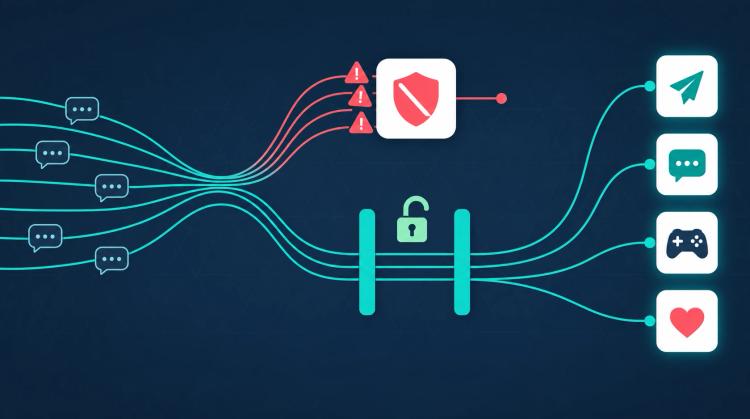
Instead of simply checking permissions, AI-powered systems analyze patterns and behavior over time. They can identify activities that may technically be allowed but still appear unusual or risky.
For example, AI can detect:
- Employees accessing areas at unusual times
- Repeated failed access attempts
- Access activity that differs from normal behavior
- Unexpected movement between multiple locations
This additional layer of intelligence helps businesses identify potential threats before they become incidents. Rather than reacting after a security event occurs, organizations can take action while the situation is still developing.
2. Real-Time Monitoring Improves Security Response
One of the biggest weaknesses of traditional security systems is delayed awareness.
In many organizations, security teams discover issues only after reviewing logs or receiving reports. By that point, the damage may already be done.
AI solves this problem by enabling real-time monitoring and alerts. Modern access control systems can continuously analyze activity and immediately notify teams when unusual events occur. This reduces response times and helps security teams focus on events that actually matter.
Platforms like Coram demonstrate how AI is reshaping access management. Coram's cloud-based access control platform allows businesses to manage doors, users, and permissions through a centralized interface while monitoring access events in real time. Because it integrates with existing infrastructure and supports centralized management across multiple locations, organizations gain better visibility without increasing operational complexity.
This combination of AI and centralized monitoring enables faster decisions and stronger security outcomes.
3. Businesses Can Manage Access More Efficiently at Scale
As organizations grow, access management becomes increasingly difficult.
A company with one office may only manage a few dozen employees. A company with multiple locations may need to manage thousands of users, contractors, and visitors. Without automation, this creates significant administrative challenges.
AI helps simplify this process by analyzing access patterns and automating routine tasks. Permissions can be assigned based on roles, adjusted when responsibilities change, and monitored continuously for unusual activity.
This creates several operational benefits:
- Reduced administrative workload
- Faster onboarding and offboarding
- Better visibility across locations
- Fewer permission-related errors
For growing businesses, these efficiencies translate directly into cost savings and improved security.
4. AI Supports Hybrid and Flexible Work Environments
The modern workplace looks very different than it did just a few years ago.
Hybrid work models have become common, and employees frequently move between offices, remote locations, and shared workspaces. Traditional access systems were not designed for this level of flexibility.
AI-powered access control systems adapt to changing work patterns more effectively. Instead of relying solely on fixed schedules and static permissions, they can recognize normal user behavior and identify activity that falls outside expected patterns.
This allows businesses to maintain security while supporting workforce flexibility. Organizations can provide employees with seamless access while still maintaining visibility into who is accessing facilities and when. For businesses embracing hybrid work, this balance between convenience and control is increasingly important.
5. Access Control Data Is Becoming a Valuable Business Asset
Most organizations view access control primarily as a security function. However, AI is expanding its role significantly.
Every access event generates valuable operational data. When analyzed properly, this information can help organizations understand how facilities are being used and where improvements can be made.
For example, businesses can identify:
- Peak building occupancy times
- Frequently used entry points
- Underutilized spaces
- Traffic patterns across locations
These insights can support decisions related to staffing, facility management, and workplace planning. Instead of treating access control as a standalone system, businesses are increasingly using it as a source of operational intelligence.
6. AI Strengthens Compliance and Accountability
Compliance has become a major priority for organizations across industries.
Whether it's financial services, healthcare, technology, or government, businesses are under increasing pressure to maintain secure environments and document access activity.
AI-powered access control systems make this easier. They automatically record access events, maintain detailed audit trails, and provide searchable records for investigations or compliance reviews.
This improves accountability in several ways:
- Clear visibility into who accessed specific areas
- Accurate records for audits
- Faster investigations when incidents occur
- Reduced reliance on manual documentation
For organizations operating in regulated industries, these capabilities are especially valuable.
7. The Future of Access Control Is Unified and Intelligent
Perhaps the biggest transformation happening today is the shift toward unified security platforms.
Businesses no longer want separate systems for access control, video surveillance, visitor management, and security monitoring. They want everything connected.
AI is making this possible by creating systems that can analyze information from multiple sources simultaneously. For example, access events can be combined with surveillance footage, visitor logs, and operational data to create a more complete picture of what is happening across a facility.
This integrated approach provides:
- Better situational awareness
- Faster incident response
- Improved operational efficiency
- Stronger overall security
As AI capabilities continue to advance, this trend will only accelerate.
Where Conversational AI Fits In
The same intelligence reshaping physical access control is also transforming how security and operations teams interact with their systems. As access platforms generate richer streams of events and audit data, teams increasingly need a faster way to query and act on that information.
This is where conversational AI agents add value. Instead of digging through dashboards, a security manager can ask a natural-language assistant questions like "Which doors had failed access attempts last night?" or "Show me after-hours entries at the warehouse this week." Platforms like Chat Data let organizations connect their own data and tools to custom AI agents — turning operational data, including access and facility records, into answers and automated workflows that anyone on the team can use. As physical and digital security converge, intelligent assistants become the natural interface for both.
Frequently Asked Questions
What is an AI-powered access control system?
An AI-powered access control system uses artificial intelligence to analyze access activity, identify unusual behavior, automate monitoring, and improve security decision-making.
How does AI improve access control?
AI adds intelligence to traditional systems by recognizing patterns, detecting anomalies, and providing real-time alerts when unusual activity occurs.
Can AI reduce insider security risks?
Yes. Since many security incidents involve authorized users, AI helps identify suspicious behavior that traditional rule-based systems may miss.
Is AI useful for multi-location businesses?
Absolutely. AI-powered systems provide centralized visibility and management across multiple facilities, making them ideal for growing organizations.
Does AI replace security teams?
No. AI enhances security teams by automating monitoring tasks and highlighting important events, allowing staff to focus on response and decision-making.
Conclusion
Access control is no longer just about opening and closing doors.
As businesses become more distributed, digital, and data-driven, traditional systems are struggling to keep pace with modern security requirements. AI is helping organizations move beyond basic access management by adding intelligence, automation, and real-time visibility.
From detecting unusual behavior and improving response times to supporting compliance and operational planning, AI is transforming access control into a strategic business tool.
For modern organizations, the question is no longer whether AI will influence physical security. The real question is how quickly businesses can adopt intelligent access control systems before traditional approaches become a competitive disadvantage.
Frequently Asked Questions
What is an AI-powered access control system?
An AI-powered access control system uses artificial intelligence to analyze access activity, identify unusual behavior, automate monitoring, and improve security decision-making — going beyond simply deciding who can open a door.
How does AI improve access control?
AI adds intelligence to traditional systems by recognizing patterns, detecting anomalies, and providing real-time alerts when unusual activity occurs, so teams can respond while a situation is still developing rather than after the fact.
Can AI reduce insider security risks?
Yes. Since many security incidents involve authorized users, AI helps identify suspicious behavior — such as access at unusual times or unexpected movement between locations — that traditional rule-based systems may miss.
Is AI useful for multi-location businesses?
Absolutely. AI-powered systems provide centralized visibility and management across multiple facilities, making them ideal for growing organizations managing thousands of employees, contractors, and visitors.